
Your Complete Guide to Getting to Bonaire from Miami: Flights, Hotels, and Adventure Costs
Reaching Bonaire doesn’t require the kind of logistical gymnastics often associated with Caribbean travel. For those who know where to look, the most seamless route begins in Miami. With direct flights and a journey that barely stretches beyond three hours, traveling to Bonaire from Miami feels less like an international trek and more like a quiet shift in latitude — one that trades glass towers for salt air and open horizons.
Miami’s role as Bonaire’s primary gateway has long been understood by divers, long-stay travelers, and those who return year after year. It is a route defined not by excess, but by efficiency — a rarity in island travel.
Flying to Bonaire from Miami
Most journeys to Bonaire from Miami depart from Miami International Airport and arrive at Flamingo International Airport, a modest terminal set just off the island’s coastal road. The route is served primarily by American Airlines, whose non-stop flights maintain a steady rhythm throughout the year, increasing in frequency as seasonal demand rises.
There is something particularly appealing about the scale of this journey. The aircraft are not oversized, the cabins rarely feel chaotic, and the flight itself moves at an unhurried pace. In just over three hours, the Atlantic fades beneath the wings and Bonaire comes into view — low, sunlit, and edged by turquoise water.
Arrivals typically take place in the early afternoon. For seasoned travelers, this detail matters. It allows time to clear immigration, collect luggage, and reach accommodations before the day softens into evening.
- Average flight duration is approximately 3 hours and 15 to 25 minutes
- Flights operate several times per week, with increased frequency during high season
- Morning departures from Miami are common on direct routes
What It Costs to Fly from Miami to Bonaire
Airfare to Bonaire from Miami reflects the island’s understated appeal. This is not a mass-market destination, and pricing follows that logic. While fares fluctuate throughout the year, travelers who plan ahead are often rewarded.
In quieter months, prices can feel surprisingly reasonable. Winter, however, brings a familiar shift. As dive season, holiday travel, and colder climates converge, demand rises and availability tightens.
Most travelers find value by focusing less on chasing the lowest fare and more on timing. Booking several weeks in advance and avoiding peak holiday windows tends to deliver the best balance of price and convenience.
In general, travelers can expect:
- More affordable fares in late spring and early fall
- Higher prices during winter and major holidays
- A premium for weekend departures and last-minute bookings
Flight Prices
Flight prices to Bonaire from Miami fluctuate based on season, demand, and how far in advance tickets are purchased.
Typical round-trip airfare ranges:
- Low and shoulder season: $450–$650 USD
- High season (winter & holidays): $750–$1,000+ USD
Several factors influence pricing:
- Winter travel coincides with peak dive season
- Limited direct flight capacity drives higher fares
- Weekend departures often cost more than mid-week flights
Travelers looking for lower fares often find success flying Tuesday through Thursday and avoiding major U.S. holidays.
Direct or Connecting Flights
Direct flights remain the definitive way to travel to Bonaire from Miami. They remove uncertainty from the journey and preserve the sense of ease that defines the destination itself.
Connecting routes, usually via Curaçao, are available but introduce additional layers — extra security checks, tighter layovers, and a longer travel day. For many travelers, those trade-offs feel unnecessary when a non-stop option exists.
Arriving in Bonaire
Arrival in Bonaire is refreshingly calm. Travelers coming from Miami are met with an airport experience that feels worlds away from larger Caribbean hubs. The process is simple: a valid passport, proof of onward travel, and confirmation of the Bonaire visitor entry tax.
Many visitors choose to pay the entry tax online before departure, allowing arrival formalities to unfold smoothly. Within minutes of exiting the terminal, the island’s pace becomes unmistakable — warm air, open space, and very little noise.
When Is the Best Time to Visit Bonaire?
Bonaire’s position outside the main hurricane belt gives it a rare sense of reliability. The island is a year-round destination, though the experience shifts subtly with the seasons.
Winter months, especially from December through April, are widely considered ideal. Conditions are slightly cooler, rainfall is minimal, and underwater visibility is exceptional. These months also bring the highest demand.
Summer and early fall offer a quieter version of the island. Temperatures rise, crowds thin, and availability improves — a combination many repeat visitors quietly favor.
At a glance:
- Winter delivers peak conditions and peak demand
- Summer offers fewer crowds and greater flexibility
- Weather remains dependable throughout the year
What to Do in Bonaire
Bonaire’s appeal lies in immersion rather than spectacle. It is an island that invites participation, not performance. While diving often dominates the conversation, the experience extends well beyond the reef.
Life here revolves around the sea and the land in equal measure. Shore diving and snorkeling offer immediate access to world-class marine life, while inland landscapes reveal salt flats, rugged coastlines, and protected national parks.
Many visitors gravitate toward:
- Snorkeling and shore diving along the west coast
- Exploring Washington Slagbaai National Park
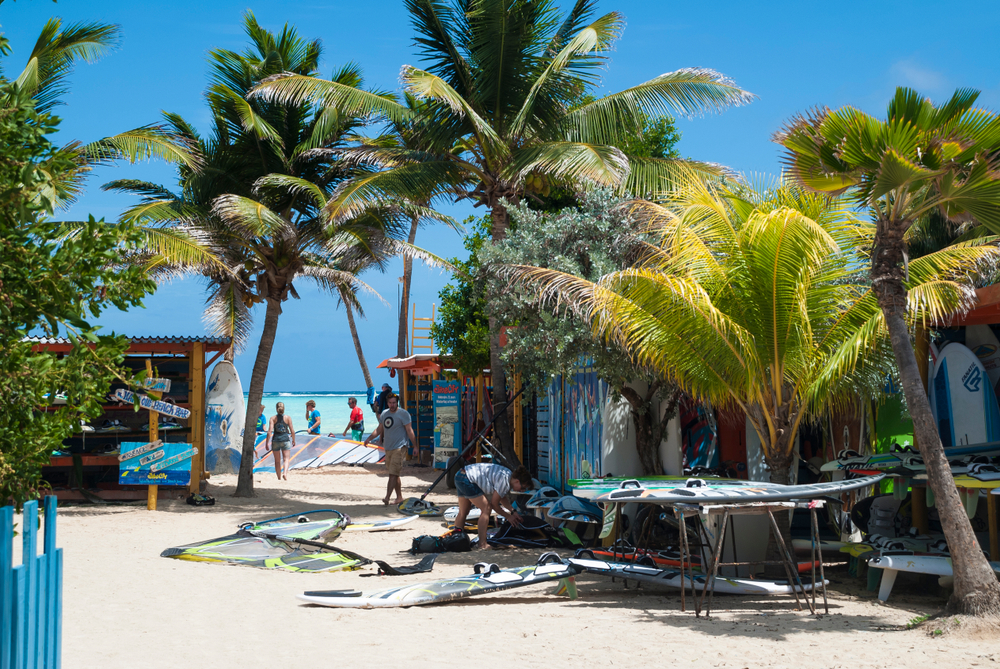
- Sailing, windsurfing, or kayaking in steady trade winds
- Long, unhurried dinners by the water
Bonaire rewards those who resist over-planning. The island’s rhythm does the rest.
From Hub to Hideaway
The transition from Miami International Airport to Flamingo International Airport is as much about tempo as distance. One is expansive and kinetic; the other is compact and composed.
For travelers flying to Bonaire from Miami, the shift is immediate. A short drive replaces long transfers, and within moments, the journey feels complete.
Traveling to Bonaire from Miami is less about movement and more about intention. The route is direct, the experience refined, and the arrival quietly confident. It is a journey that respects the traveler’s time — and sets the tone for everything that follows on the island.